

Seizure recruitment#
This experiment asks when a finite burst remains focal and when directed coupling recruits a chain of neighboring regions. The classification is tied to continuous regional activity and onset times.
Prompt#
Start a seizure-like burst in one brain region and show when it remains local and when it recruits neighboring regions.
Agent decision path#
Classify the task as aggregate multi-region dynamics.
Route regional activity and coupling to
brainmass.Select a four-region
FitzHughNagumoStepchain with directed additive coupling.Deliver a finite pulse only to region 0 and preserve a fixed-capacity delay history.
Define recruitment before the sweep as
V >= 0.5for at least1 ms.Map coupling, propagation delay, and pulse amplitude across complete independent rollouts.
Keep delay and duration unit-bearing while retaining peak activity and onset for every region.
Verify delay phase and ordered recruitment with focused tests.
Result#
At coupling 0.15 and pulse 0.35, only region 0 is recruited. At coupling 0.45 and pulse 0.50, all four regions recruit in order at 6.4, 9.5, 12.8, and 16.5 ms. The sweep evaluates 80 parameter combinations.
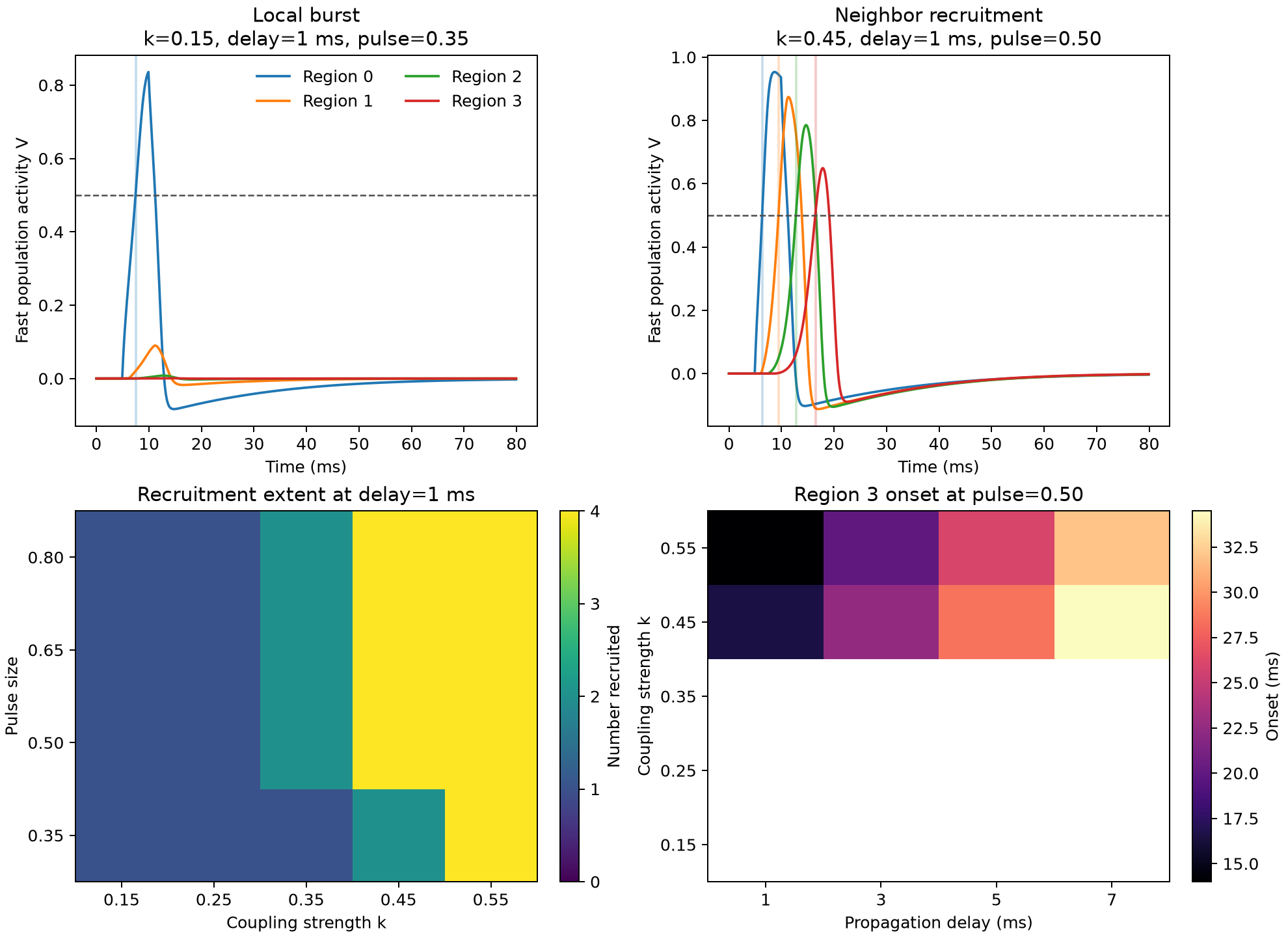
Fig. 3 Ordered onset times distinguish propagation from simultaneous activation, while the sweep shows where distal recruitment is absent or present.#
With-BrainX skill/Without skill comparison#
With BrainX skill
Source captured · benchmark pending
Record generation time, the 80-condition runtime, memory, test outcome, and whether the regional onset order remains reproducible.
Without BrainX skill
Matched run not collected
Use the same recruitment definition, sweep grid, and hardware before making any speed or correctness comparison.