

Cortical wave obstacle#
This experiment launches a spiking activity wave across an excitatory and inhibitory sheet, places a silent circular obstacle in its path, and maps whether the wave crosses, bends, splits, or dies.
Prompt#
Create a sheet of excitatory and inhibitory neurons and trigger a brief spark at its left edge. Show the activity wave crossing the sheet, then place a silent circular patch in its path and reveal whether the wave bends around it, splits, or dies. Sweep the patch size and inhibition strength and summarize the outcomes in a phase map.
Agent decision path#
Classify the model as a spatial point-neuron E/I network.
Route neural dynamics to
brainpy-stateand sparse spikes tobrainevent.Place one excitatory and one inhibitory LIF neuron at each sheet position.
Build explicit local CSR projections and launch a
3 msleft-edge current pulse.Silence the obstacle with both a hyperpolarizing clamp and spike mask.
Map seven lesion radii and six inhibitory gains to independent state lanes.
Define crossing, bending, splitting, and death from far-edge reach and bypass-corridor activation.
Save the storyboard, quantitative phase map, outcomes, and focused checks.
Result#
The 42-condition sweep produces 4 crossings, 16 splits, 4 one-sided bends, and 18 deaths. Each phase-map label is paired with the measured right-edge reach fraction.
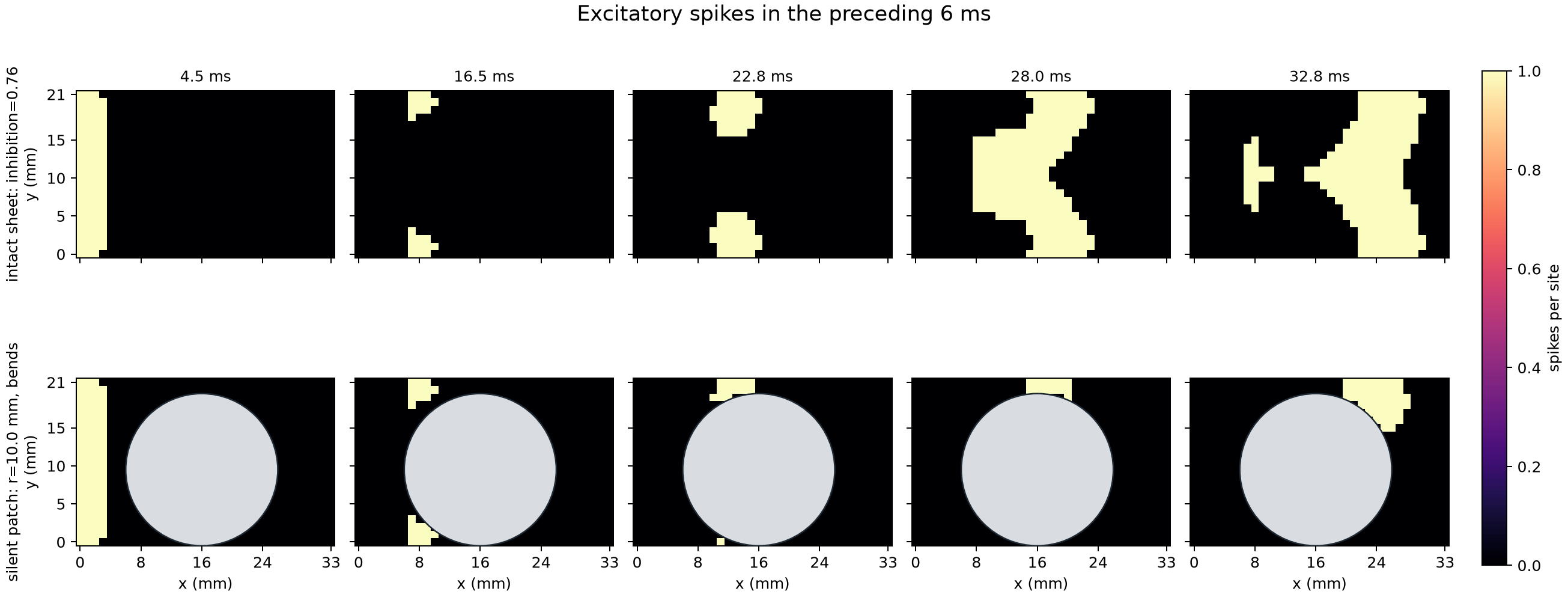
Fig. 5 Matched snapshots make the spatial perturbation visible.#
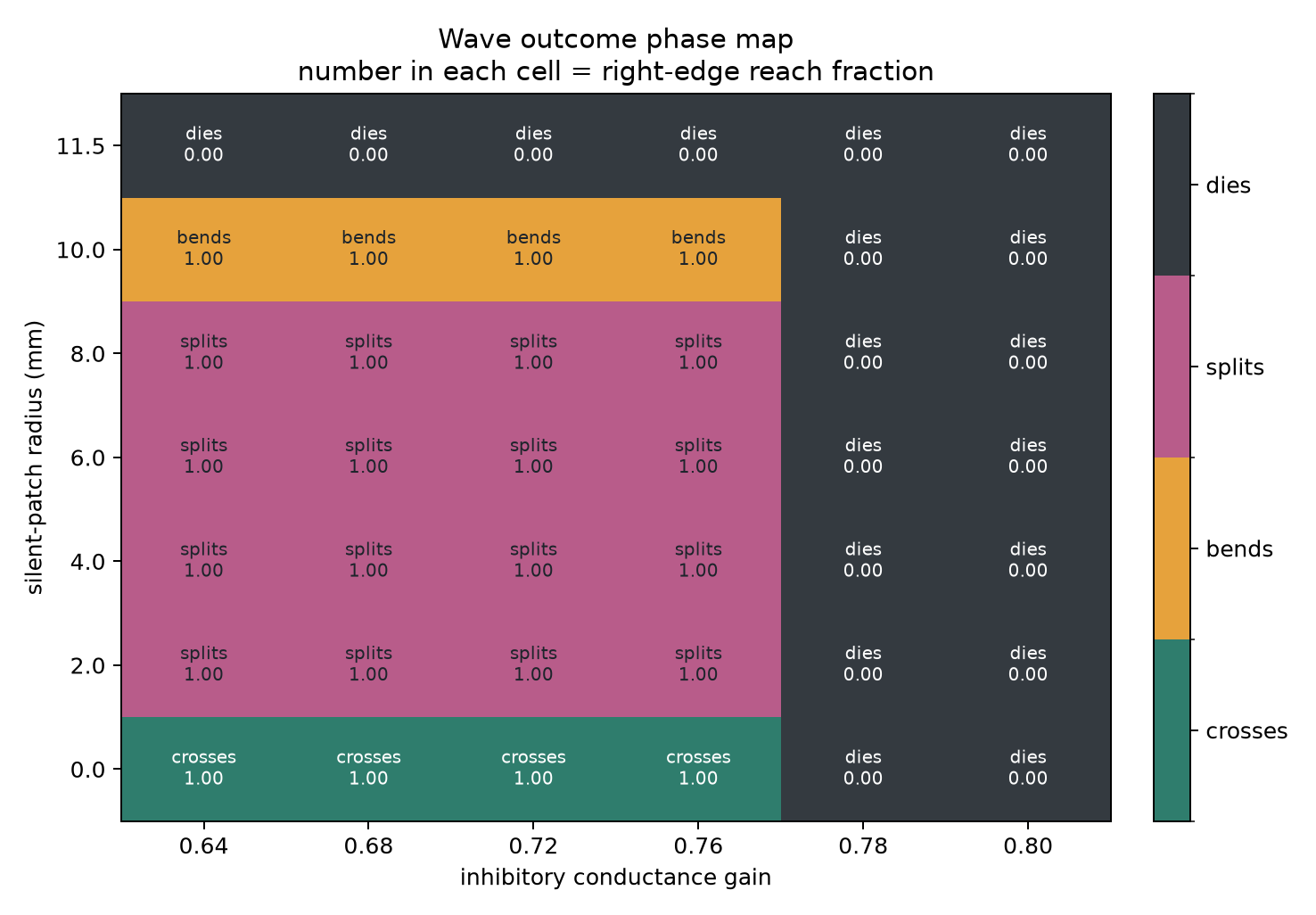
Fig. 6 The phase map connects each qualitative outcome to the continuous reach measurement used to classify it.#
With-BrainX skill/Without skill comparison#
With BrainX skill
Source captured · benchmark pending
Measure the same 42 conditions with compilation, execution, memory, and nonblank-artifact checks reported separately.
Without BrainX skill
Matched run not collected
Preserve topology, grid size, obstacle intervention, and phase definitions before comparing code or performance.