

Edge of criticality#
This experiment sweeps recurrent excitation across matched sparse spiking networks to locate a narrow, highly variable region that remains below a predefined instability limit.
Prompt#
Start with a recurrent spiking network where a single spark usually fades away. Gradually strengthen excitation until sparks become neural avalanches and finally runaway activity. Across many network realizations, locate the narrow region where activity is most variable without becoming unstable.
Agent decision path#
Classify the model as a recurrent point-neuron E/I network with sparse event communication.
Route neurons to
brainpy-stateand strictly positive sparse E-to-E weights tobrainevent.Replace a single-cell spark with one brief pulse to an eight-neuron seed assembly so finite propagation is possible.
Match independently seeded network realizations across all coupling values.
Run coupling-realization lanes through stateful
vmap2inside one timefor_loop.Define avalanche susceptibility and runaway activity before selecting the critical region.
Freeze calibration, use a held-out seed set, and refine only midpoint samples at the boundary.
Recompute saved metrics from raw binned counts and run four focused checks.
Result#
A held-out 320-lane ensemble locates a stable critical region at E-to-E coupling 0.745–0.750. The sampled optimum is 0.750 with susceptibility 2089.73 and 0/16 unstable realizations; runaway probability rises sharply above it.
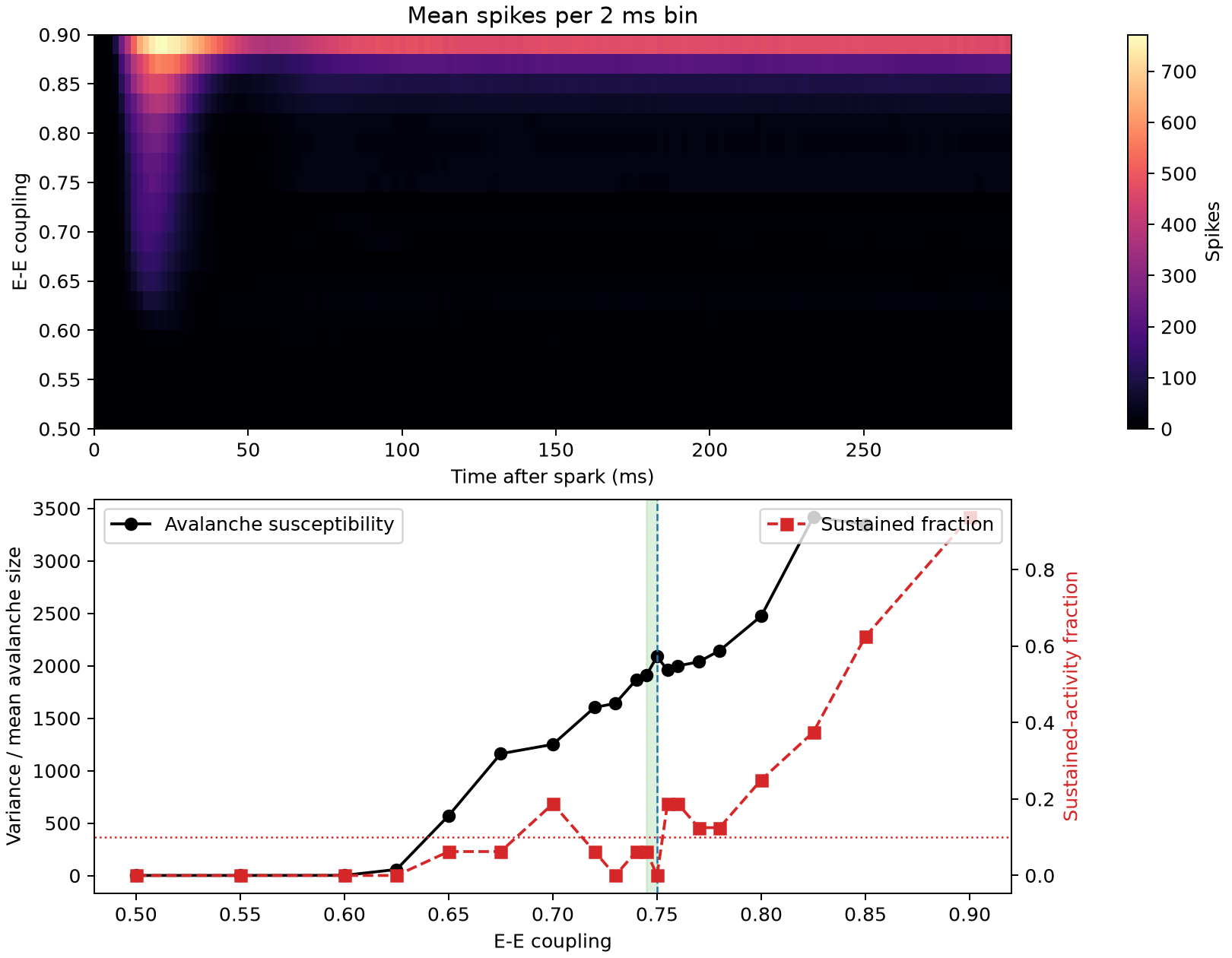
Fig. 8 The reported interval must contain adjacent samples, remain below the instability cap, and reach at least 90 percent of the stable susceptibility peak.#
With-BrainX skill/Without skill comparison#
With BrainX skill
Source captured · benchmark pending
Record compile time, full held-out sweep time, peak memory, and raw-count agreement for the fixed 320-lane protocol.
Without BrainX skill
Matched run not collected
Use the same sparse graphs, seed set, coupling grid, thresholds, and midpoint-refinement rule.